Soft and Chewy Butterscotch Cookies
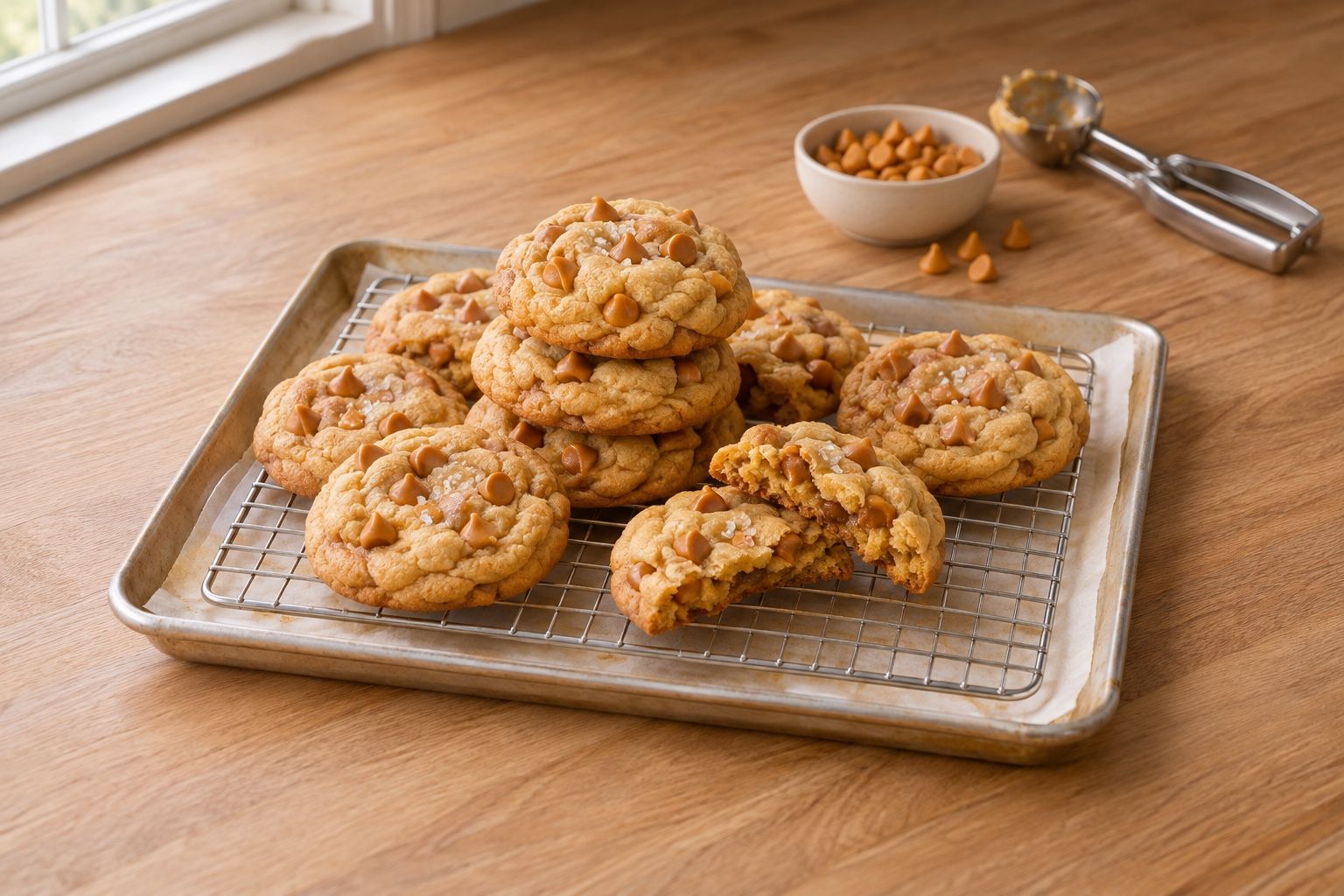
Thick, chewy butterscotch cookies with golden edges, dark brown sugar and plenty of butterscotch chips. The scooped dough freezes well, too.
 By Caroline Webb · Updated
- Prep
- 15 min
- Cook
- 24 min
- Chill
- 30 min
- Total
- 1 hr 9 min
- Serves
- 24
These butterscotch cookies are thick and chewy, with golden edges and soft middles loaded with sweet, caramel-like chips. Dark brown sugar and an extra egg yolk give the dough a rich, toasty flavor and a tender bite that stays soft for days.
We love that the dough comes together with everyday pantry staples and no oatmeal. A quick 30-minute chill keeps the cookies from spreading, so they bake up tall and bakery-style.
Short on time during the week? Scoop the dough into balls and freeze them, then bake just a few straight from the freezer whenever you want a warm cookie.
How We Developed This Recipe
- The four versions we compared agree on the basics: cream softened butter with brown sugar, bake around 350°F, and pull the cookies as soon as the edges turn golden. They differ on the eggs (a whole egg, a lone yolk, or two eggs) and on how much butterscotch goes in, from a modest handful to a full cup or more. We went with dark brown sugar, one egg plus an extra yolk, and a generous 1 1/2 cups of chips because that mix gives a thick, chewy cookie with the deepest caramel flavor. We also added a short chill and a teaspoon of cornstarch to keep the cookies from spreading thin.
Why You’ll Love It
- Thick, chewy centers with golden, lightly crisp edges
- Dark brown sugar and plenty of butterscotch chips give rich caramel flavor
- No oatmeal needed, just a simple creamed butter dough
- Scooped dough balls freeze well, so you can bake a few cookies at a time
Ingredient Notes & Swaps
- Butterscotch chips
- Any standard brand works. Keep a small handful aside to press onto the warm cookies if you want them to look extra chip-studded.
- Dark brown sugar
- The extra molasses deepens the butterscotch flavor and keeps the cookies moist. Light brown sugar works too, and the cookies will be a bit paler and milder.
- Unsalted butter
- Soften it until it dents when you press it but still feels cool. Greasy, half-melted butter is the most common reason cookies spread too much.
- Egg yolk
- A whole egg plus one extra yolk adds richness and gives the centers their soft, chewy bite.
- Cornstarch
- Just a teaspoon keeps the cookies tender and helps them stay thick. If you leave it out, they will still taste great, just a little flatter.
Tips for Success
- If your cookies spread into thin puddles, the butter was probably too warm or the dough skipped its chill. Keep the butter cool to the touch and give the dough the full 30 minutes in the fridge.
- Dry, puffy cookies usually come from too much flour or too much time in the oven. Spoon and level the flour, and take the cookies out while the centers still look a little soft.
- Let the baking sheet cool before loading the next batch. Dough set on a hot pan starts melting before it can bake.
- A 2-tablespoon cookie scoop keeps every cookie the same size, so they all bake at the same pace.
- For neat round cookies, gently nudge the edges with a round cutter or the rim of a glass right after they come out of the oven.
Variations
- Oatmeal butterscotch cookies: Cut the flour to 1 3/4 cups and stir in 1 1/2 cups old-fashioned rolled oats with the chips. Bake 11 to 13 minutes.
- Butterscotch chocolate chip cookies: Use 3/4 cup butterscotch chips and 3/4 cup semisweet chocolate chips or chunks.
- Butterscotch pecan cookies: Fold in 3/4 cup chopped toasted pecans along with the chips.
- Milder version: Swap the dark brown sugar for light brown sugar for a paler, more delicate cookie.
Storage & Reheating
- Room temperature
- Keep cooled cookies in an airtight container for up to 5 days. Separate layers with parchment so they don't stick together.
- Freezer (baked)
- Freeze cooled cookies in a freezer bag or airtight container for up to 3 months. Thaw at room temperature for about 30 minutes.
- Freezer (dough)
- Freeze scooped dough balls on a lined sheet until firm, then move them to a freezer bag for up to 3 months. Bake from frozen at 350°F, adding 1 to 2 minutes to the bake time.
Frequently Asked Questions
How do you make butterscotch cookies soft and chewy?
Use dark brown sugar, add an extra egg yolk, and take the cookies out while the centers still look slightly underdone. They firm up on the warm pan and stay soft inside.
Do you need to chill butterscotch cookie dough before baking?
We recommend it. A 30-minute chill firms up the butter so the cookies bake thick and chewy instead of spreading thin.
Why do my butterscotch cookies spread too much?
The usual causes are butter that was too soft, skipping the chill, or putting dough on a warm baking sheet. Measuring the flour too lightly can also lead to extra spreading.
Can I use light brown sugar instead of dark brown sugar?
Yes, it swaps in cup for cup. The cookies will be a little lighter in color with a softer caramel flavor.
Can you freeze butterscotch cookie dough and bake it from frozen?
Yes. Freeze the dough in scooped balls, then bake them straight from the freezer at 350°F, adding 1 to 2 minutes to the usual time.
Recipe
Soft and Chewy Butterscotch Cookies
Prep 15 minCook 24 minChill 30 minTotal 1 hr 9 minYield 24 cookies
Ingredients
Dry ingredients
Cookie dough
EquipmentStand mixer or hand mixer · Large and medium mixing bowls · Whisk · Rubber spatula · 2 baking sheets · Parchment paper · 2-tablespoon cookie scoop · Wire cooling rack
Instructions
Make the dough
- Whisk the dry ingredientsIn a medium bowl, whisk the flour, baking soda, cornstarch and salt until evenly blended. Set the bowl aside.Tip: Spoon the flour into the measuring cup and level it off. Scooping straight from the bag packs in extra flour and makes dry, cakey cookies.
- Cream the butter and sugarsIn a large bowl, beat the butter, dark brown sugar and granulated sugar on medium speed for 2 to 3 minutes, scraping the bowl once or twice, until the mixture looks lighter in color and fluffy.
- Beat in the eggs and vanillaAdd the egg, egg yolk and vanilla. Beat on medium speed for about 30 seconds, until smooth with no yellow streaks, then scrape down the bowl.
- Mix in the flourWith the mixer on low, add the flour mixture in two additions and mix just until no dry flour is visible. The dough will be thick and soft.Tip: Stop as soon as the flour disappears. Extra mixing makes the cookies tougher.
- Fold in the butterscotch chipsUse a rubber spatula to stir in the butterscotch chips until they are spread evenly through the dough.
- Chill the doughCover the bowl and refrigerate for 30 minutes, until the dough feels firm and no longer sticky.Tip: You can chill the dough for up to 2 days. If it is very firm, let it sit out for about 10 minutes so it is easier to scoop.
Bake
- Heat the oven and line the pansNear the end of chilling, heat the oven to 350°F with a rack in the center. Line two baking sheets with parchment paper.
- Scoop the doughScoop 2-tablespoon balls of dough and set them about 2 inches apart, 12 per sheet. Sprinkle each with a tiny pinch of flaky salt, if you like.Tip: Keep the second sheet of dough balls in the fridge while the first one bakes.
- Bake until the edges are goldenBake one sheet at a time for 10 to 12 minutes, until the edges are golden brown and the centers look puffed and slightly underdone.Tip: Pull them while the middles still look soft. They finish setting on the hot pan.
- Cool and setLet the cookies rest on the baking sheet for 5 minutes, until firm enough to lift, then move them to a wire rack to cool completely.
Notes
- This recipe makes about 24 cookies; one cookie is one serving.
- Baking one sheet at a time on the center rack gives the most even browning. If you bake two sheets at once, rotate and swap them halfway through.
Nutrition (per serving, estimated)
- Calories
- 217
- Protein
- 2 g
- Carbs
- 27 g
- Fat
- 11 g
Saturated fat 7.5 g · Fiber 0.3 g · Sugar 17 g · Sodium 140 mg · Cholesterol 36 mg

About the author
Caroline Webb
Caroline Webb writes desserts and baking: cookies, quick breads, bars and no-bake treats. Her recipes explain why each step matters and how to tell when a bake is done.
More recipes by Caroline