Easy Mashed Potatoes Recipe with Yukon Golds
Creamy, buttery mashed potatoes made with Yukon Golds, warm milk and butter. Simple, fluffy and ready in about 40 minutes.

- Prep
- 15 min
- Cook
- 25 min
- Total
- 40 min
- Serves
- 6
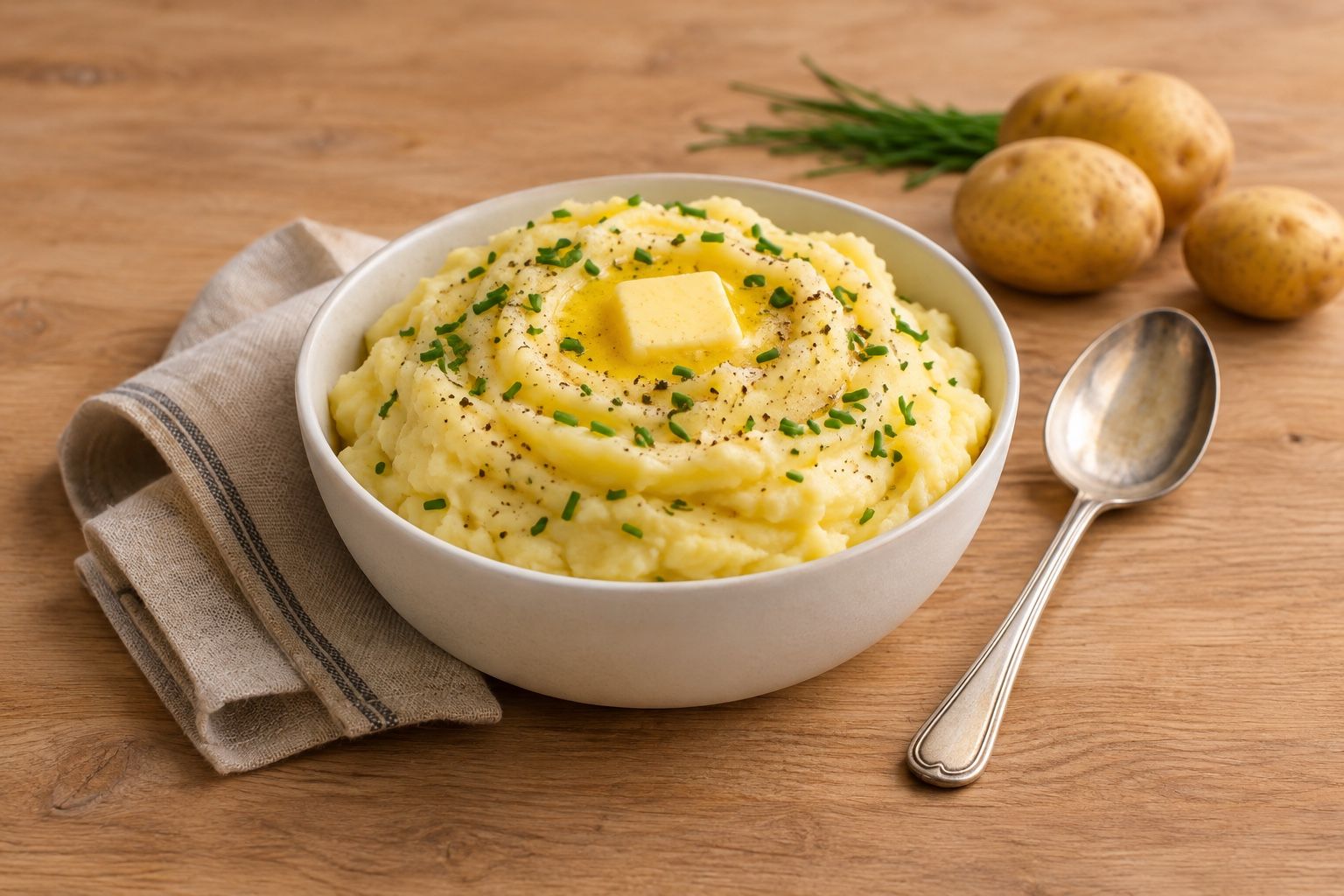
Fluffy, buttery and just a little rustic, this easy mashed potatoes recipe is the side dish we reach for again and again. Yukon Gold potatoes mash up naturally creamy, and warm milk with melted butter keeps everything smooth and hot.
The method is simple. Start the potatoes in cold salted water, simmer until tender, then give them a quick steam-dry in the pot so they soak up every bit of butter. A gentle hand with the masher keeps them light instead of gluey.
It all comes together in about 40 minutes, and much of that is hands-off simmering, so it fits a busy weeknight just as easily as a holiday table. Add a sprinkle of chives and a pat of butter on top, and dinner is set.
How We Developed This Recipe
- All five versions we compared start the potatoes in cold water and warm the dairy before it goes in, so we kept both steps. Simmer times ranged from 15 to 30 minutes depending on the size of the pieces, and some versions return the drained potatoes to the pot to steam off extra moisture. We went with Yukon Gold potatoes cut into 1 1/2-inch chunks so they cook quickly into a creamy, buttery mash, plus that quick steam-dry step because drier potatoes soak up more butter and milk without turning watery. Butter amounts varied a lot, so we settled on a middle-ground 6 tablespoons for 3 pounds of potatoes.
Why You’ll Love It
- Just a handful of everyday ingredients and one pot for the potatoes
- Yukon Gold potatoes mash up naturally creamy and buttery
- Warm milk and butter keep the mash fluffy and hot, never gluey
- Ready in about 40 minutes, so it works for weeknights and holidays alike
Ingredient Notes & Swaps
- Yukon Gold potatoes
- We love their naturally buttery flavor and creamy texture. Russets work too and give you a lighter, fluffier mash, though they can soak up a little more milk.
- Butter
- We use unsalted butter so we can control the salt. If you only have salted butter, use it and go easy on the extra salt at the end.
- Whole milk
- Whole milk gives a creamy mash without being too heavy. Swap in half-and-half or heavy cream if you want something richer.
- Kosher salt
- Salting the cooking water seasons the potatoes all the way through. It makes a bigger difference than salting only at the end.
- Garlic
- Totally optional, but simmering a couple of whole cloves with the potatoes adds a soft, mellow garlic flavor. Just mash them right in.
Tips for Success
- Gluey potatoes usually come from overworking. Mash by hand and fold in the dairy gently with a spatula instead of beating it in.
- Watery mash comes from wet potatoes. Drain them well and don't skip the quick steam-dry in the hot pot.
- Lumps usually mean the potatoes weren't quite done. Check the largest piece before draining; it should be completely soft in the center.
- Salt the cooking water generously. It seasons the potatoes from the inside, so you need less salt at the end.
- To keep mashed potatoes warm for up to 2 hours, transfer them to a slow cooker on the warm setting and stir in a splash of warm milk before serving.
Variations
- Tangy and extra creamy: fold in 1/4 cup sour cream or 2 ounces softened cream cheese along with the milk.
- Richer mash: use half-and-half or heavy cream in place of the whole milk.
- Rustic skin-on: use red or Yukon Gold potatoes, leave the skins on, and mash to a chunkier texture.
- Dairy-free: swap the butter for olive oil or plant-based butter and use unsweetened plain oat or almond milk.
Storage & Reheating
- Fridge
- Cool, then store in an airtight container in the refrigerator for 3 to 4 days.
- Freezer
- Freeze in airtight containers or freezer bags for up to 2 months. Thaw overnight in the fridge. The texture may be a little looser, so stir well when reheating.
- Reheat
- Warm on the stovetop over low heat or in the microwave, stirring often and adding a splash of milk to loosen, until hot all the way through (165°F).
Frequently Asked Questions
What are the best potatoes for mashed potatoes?
Yukon Gold potatoes make a creamy, buttery mash, and russets make a lighter, fluffier one. Both work well; waxy red potatoes are better for chunky, skin-on mash.
Should I peel potatoes before making mashed potatoes?
For smooth, classic mashed potatoes, yes. If you like a rustic texture, you can leave thin-skinned Yukon Gold or red potatoes unpeeled; just scrub them well.
How long should I boil potatoes for mashed potatoes?
One-and-a-half-inch chunks usually need 12 to 15 minutes at a gentle simmer once the water boils. They're ready when a fork slides into the center with no resistance.
How do I keep mashed potatoes from turning gluey?
Mash by hand with a potato masher or ricer, never a blender or food processor, and fold in warm dairy gently. Overmixing releases too much starch and makes them sticky.
Can I make mashed potatoes ahead of time?
Yes. Make them up to 2 days ahead, refrigerate, then reheat gently with a splash of warm milk until hot (165°F), or keep them warm in a slow cooker for up to 2 hours.
Recipe
Easy Mashed Potatoes Recipe with Yukon Golds
Prep 15 minCook 25 minTotal 40 minYield 6 servings
Ingredients
EquipmentVegetable peeler · Large pot · Colander · Small saucepan · Potato masher · Flexible spatula
Instructions
- Peel and cut the potatoesPeel the potatoes and cut them into even 1 1/2-inch chunks. Keeping the pieces about the same size helps them cook at the same rate.Tip: If you're prepping a little early, keep the cut potatoes in a bowl of cold water so they don't turn gray.
- Start them in cold waterPut the potatoes (and garlic cloves, if using) in a large pot and add cold water to cover by about 1 inch. Stir in 1 tablespoon kosher salt. Bring to a boil over high heat, which usually takes 8 to 10 minutes, then lower the heat to keep a steady, gentle simmer.Tip: Starting in cold water lets the outsides and centers cook evenly, so you don't get mushy edges with firm middles.
- Simmer until fork-tenderSimmer uncovered for 12 to 15 minutes, until a fork or knife slides into the center of the biggest piece with no resistance and the edges just start to look a little crumbly.
- Warm the milk and butterWhile the potatoes cook, warm the milk and butter in a small saucepan over medium-low heat until the butter melts and the milk is steaming but not boiling. You can also do this in the microwave in 30-second bursts.Tip: Warm dairy blends in smoothly and keeps the potatoes hot. Cold milk can make the mash stiff and lukewarm.
- Drain and steam dryDrain the potatoes well in a colander. Return them to the empty pot and set it over low heat for 1 to 2 minutes, shaking the pot gently, until the surfaces look dry and slightly chalky.
- Mash the potatoesTake the pot off the heat and mash the potatoes (and garlic) with a potato masher until no large lumps remain.Tip: Skip the blender, food processor, or electric mixer. They overwork the starch and turn potatoes gluey.
- Fold in the warm dairyPour in about three-quarters of the warm milk and butter mixture and gently fold it in with a flexible spatula. Add the rest a little at a time until the potatoes are as creamy as you like.Tip: The mash may look loose at first, but it thickens as the potatoes absorb the liquid over a minute or two.
- Season and serveStir in the remaining 1 teaspoon kosher salt and the pepper. Taste and add more salt if needed. Spoon into a warm bowl, top with chives if you like, and serve hot.Tip: A pat of butter melting on top is always a welcome finishing touch.
Notes
- If you use salted butter, start with half of the seasoning salt and add more only after tasting.
- For an extra-smooth mash, press the potatoes through a ricer or food mill instead of using a masher.
Nutrition (per serving, estimated)
- Calories
- 300
- Protein
- 6 g
- Carbs
- 42 g
- Fat
- 13 g
Saturated fat 8 g · Fiber 3 g · Sugar 4 g · Sodium 380 mg · Cholesterol 34 mg

About the author
Tessa Monroe
Tessa Monroe writes RecipePan's easy recipes: short ingredient lists, everyday equipment and steps a new cook can follow. She looks for the shortcut that saves time without costing flavor.
More recipes by Tessa